Reimagining opera in Greater 水多多导航: human鈥揂I collaboration and the future of performance
What does it mean to build a national opera presence in Greater 水多多导航 today 鈥� and for the future? This is the question at the heart of , a collaborative research and engagement initiative between (ENO) and The University of 水多多导航, which Dr Kamila Rymajdo is leading as Research Associate.
As ENO establishes a second base in the region, this project brings together stakeholders to explore what opera could 鈥� and should 鈥� become in Greater 水多多导航.
Running from 2025 to 2027, Tuning into Opera is exploring four research themes:
- Opera in Greater 水多多导航: History, perceptions and visibility
- Place-making and storytelling: Reflecting local identity through opera
- Inclusion and accessibility: Breaking down barriers and opening doors
- Innovation and technology: Imagining the future of opera-making
The project takes a mixed-methods approach, combining surveys, interviews, workshops and creative collaborations. So far, this has included public surveys exploring perceptions of opera and career accessibility, artist and researcher roundtables and stakeholder interviews across the region鈥檚 cultural sector. Together, these activities are helping to build a nuanced understanding of opera鈥檚 current position in Greater 水多多导航 and its future potential. At its core, this is a project about listening: listening to audiences, to those who feel excluded from opera, and to those already reimagining what it can be.
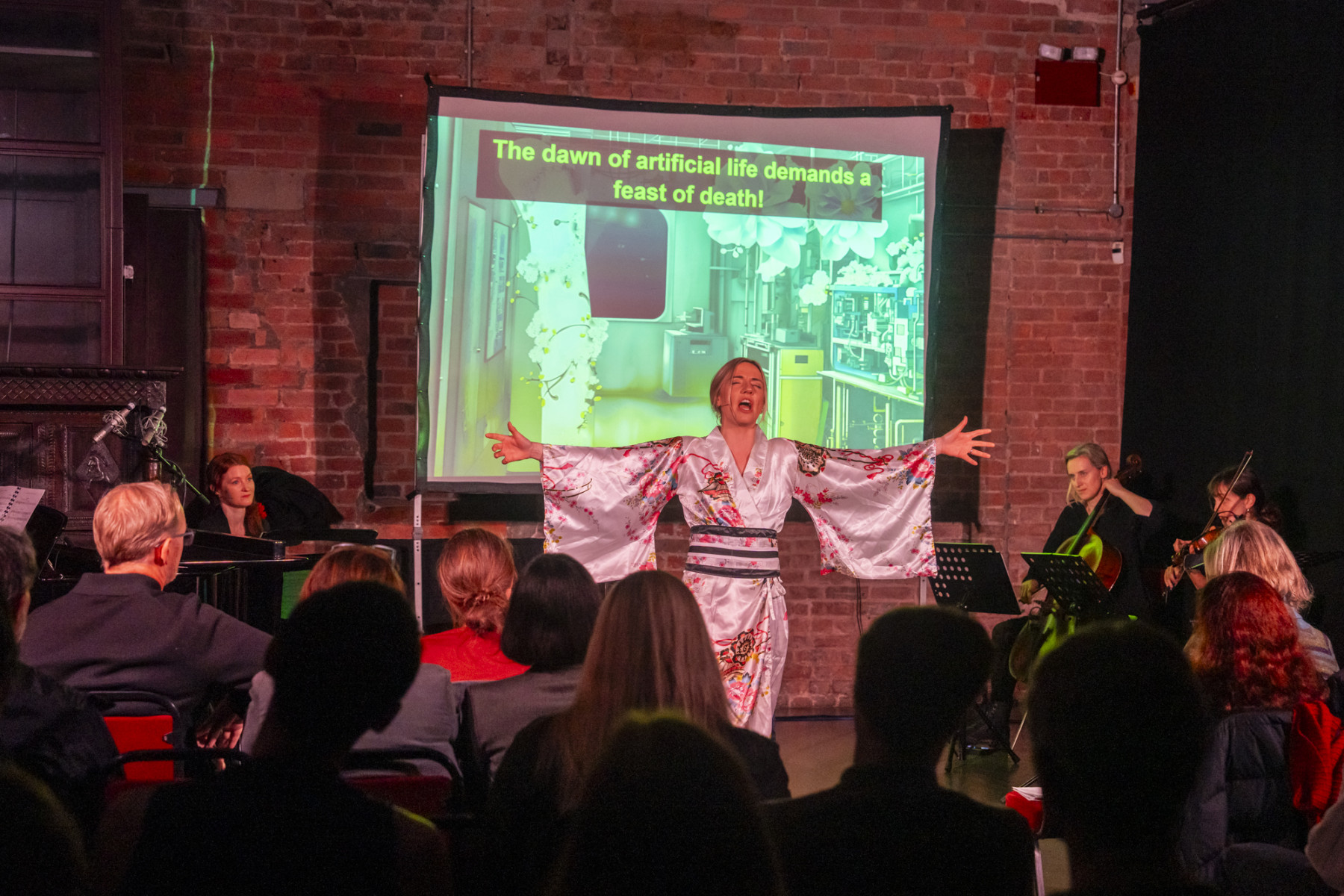
The project鈥檚 themes came into particularly sharp focus at a recent public workshop: Future of Opera: Human鈥揂I Improvisation, held at the International Anthony Burgess Foundation in May. The event formed part of both Tuning into Opera and the series and explored how digital technologies might reshape opera as a more participatory artform.
Opera meets AI: experimentation and participation
The workshop featured a live demonstration of scenes from an immersive sci鈥慺i opera developed by Dr Alexandra Huang-Kokina, Bicentenary Fellow in Music at the University of 水多多导航 and.
Audience members were not passive observers. Asked to become Y艒kai 鈥� playful spirits influencing events 鈥� they used their smartphones to submit emoji-based emotional responses and vote on key narrative decisions. This input was aggregated through an 鈥榚motion engine鈥�, which shaped the performance in real time, affecting scenography, timbre shifts and even the fate of characters within the story. For performers, this created a responsive and partially improvised environment, where they adapted not only to each other, but to audience input mediated through AI.
In conversation: AI, creativity and the future of opera
The performance was followed by a panel discussion to reflect on the broader implications of AI for opera. The conversation featured Dr Alexandra Huang-Kokina, Bob Holland, Executive Producer at English National Opera, Dr Jennifer Cearns, Lecturer in AI at The University of 水多多导航, and Cliona Cassidy, one of the event鈥檚 performers, a soprano, composer and experimental vocalist. It was chaired by Lauren Monaghan-Pisano, Director of Strategy and Partnerships at ENO.
Dr Alexandra Huang-Kokina framed the workshop鈥檚 performance as a cultural intervention: opera was used as a medium through which to explore and communicate the role of AI in society. She emphasised that this is particularly important given that public discourse often positions AI as inherently threatening. By embedding AI within an artistic context, she suggested, we can create a platform for more nuanced and imaginative engagement.
Another key theme was the move from linear narrative structures to interactive 鈥榮toryworlds鈥�, which Alexandra likened to gaming environments. The panel reflected on how this approach can reposition opera as an immersive and participatory experience, where meaning is co-produced rather than delivered. They noted that such an approach opens up new possibilities for audience engagement, while also prompting important questions about how creative control is balanced and how authorship is remunerated within more collaborative forms.
The discussion also touched on the practicalities of integrating AI into live performance. The use of mobile phones, for example, enables real-time interaction and participation, while also introducing considerations around audience focus.
The panel also reflected on the wider implications of applying technologies such as emotion recognition and data aggregation in live performance contexts. In particular, they reflected on how audience responses 鈥� such as emoji inputs 鈥� are translated into collective datasets that shape the performance, raising questions about how individual emotions are represented within aggregated data. The discussion also looked ahead to more advanced forms of audience sensing, including biometric tracking and facial recognition, highlighting the importance of consent and critical reflection when incorporating these technologies into live cultural experiences.
Questions of access and inclusion 鈥� central to Tuning into Opera 鈥� also formed an important part of the discussion. AI and digital technologies can be seen as offering new pathways into opera, particularly for younger audiences and those with limited prior exposure. At the same time, the panel recognised that not all audiences will have equal access to or feel comfortable with digital participation.
Continuing the conversation
As Tuning into Opera moves forward, these questions will remain central to the initiative鈥檚 research and engagement work. Over the coming year, Tuning into Opera will continue to develop workshops, consultations and collaborations across Greater 水多多导航, working with communities and partners to explore how opera can become more inclusive, responsive and relevant.
The Human鈥揂I Improvisation workshop offered one possible vision of opera鈥檚 future. More importantly, it demonstrated the value of bringing research, creative practice and public engagement into dialogue.
If you are interested in being part of this conversation, we would love to hear from you. Get in touch by emailing tuningintoopera@eno.org.
About the Author
Dr Kamila Rymajdo is a writer and academic. She is an Honorary Research Fellow within the Music Department at University of 水多多导航 and works as a Research Associate for English National Opera. She is also Leader in Residence at the University of Lancashire for her contribution to music journalism. Previously, she was a Research Fellow at University of Lodz.
About ENO
English National Opera are the national opera company dedicated to creating extraordinary encounters with opera, on stage and beyond. Founded in 1931 as Sadler鈥檚 Wells Opera to make opera accessible to all, we continue that mission today by presenting opera that鈥檚 different, creatively daring and inclusive. From performances at the London Coliseum and in Greater 水多多导航, to work in schools, communities and public spaces across the country, we are committed to reaching and reflecting the full diversity of our nation.
About Creative 水多多导航
is an interdisciplinary platform based at The University of 水多多导航. The platform champions research in creativity and creative practice, bringing together research communities with external stakeholders to explore new research areas and address strategic opportunities. Please visit the for more information.