“Any research must be accessible to others. There's no point to research that can't be used�
Sharing Open Research with public contributors with lived experience
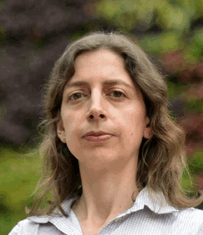
We’re pleased to launch a new Open Research Spotlight series, focusing on the work of our . In the first instalment of the new series, Prof Ellen Poliakoff is in conversation with Open Research Librarian John Hynes, reflecting on the outcomes and impacts of her so far. Prof Poliakoff co-directs the investigating how our brains use sensory information, such as vision and touch, to create actions and interact with the world. Her focussed on people with lived experience, for example, of their own or a family member’s health condition, who contribute to research by advising on, shaping or co-producing research (“public contributors�; see about how to do this). She aims to share the principles of Open Research with public contributors.
Why did you want to do a Fellowship?
“As a lab, we have been involving people with lived experience of Parkinson’s and autistic people in shaping and advising on our research for more than 10 years. Involvement and co-production is an important , particularly in ensuring the research is relevant to those affected. We have also been trying to implement other Open Research practices, such as and and analysis via . Often when a public contributor begins their role, they are offered some general training on “What is research?� but there seemed to be a gap in the training offered about Open Research.
What did you do during your Fellowship?
The first stage of my Fellowship involved doing a (pre-registered) piece of research into what public contributors already did (or did not) know, and would like to know, about Open Research and the different kinds of Open Research practices (DOI: ). I worked with BEAM lab co-director and chair of Professor Emma Gowen, and collaborator (and former PhD student) Dr Jade Pickering, who had championed Open Research during her PhD. I also collaborated with public contributors -Anne Ferrett, Peter Baimbridge and Graham Hanks who contributed their lived experience of caring and autism, as well as their prior experience as public contributors to research.
What challenges did you face?
My first challenge was a ‘chicken and egg’ situation – how could I ask people what they know about Open Research when they might never have heard the term, or know it by another name? Descriptions of the practices can also be quite difficult to follow, even for other researchers, and full of jargon. With advice from my public contributors and collaborators, I created clear definitions of different practices, such as , , and . I also created a fictional mini story for each practice, illustrating how a researcher might carry it out. Participants could choose to listen to a recording if they preferred less reading (a great suggestion from one of our public contributors). We were then able to ask people questions about each practice, having explained what it was.
My next challenges were to find public contributors to take part, and to decide what term to use. I needed to make sure that those who took part had been a public contributor, rather than taking part in research as a participant. This can be confusing as surveys and focus groups can be used to shape research, as well as being part of a research study. Furthermore, there are many different terms used within different fields or institutions, such as patient and public involvement volunteer, co-production officer, service-user etc. I settled on ‘public contributor’ and made sure to define it. We also recruited via gatekeepers (charities or researchers who worked with public contributors) and encouraged them to translate the name into the right terminology for their contributors.
A final challenge was finding time to do my Fellowship. It wasn’t possible to relinquish many of the responsibilities of my main job, but the financial support from the Fellowship meant that two brilliant recent PhD students from our lab – Dr Hayley Shepherd and Dr Ying Bai – could work with me on the set up and analysis of the survey.
What did you find out?
The participants in our survey, who had a range of lived experience, were passionate about the benefits of co-production. The term ‘Open Research’ wasn’t familiar to many of them, but they rated many practices as both familiar and important after the definitions and mini stories. Many of their comments were very insightful, such as the quote I’ve used in the title of this piece, and some described the balance between the benefits of science (making research more efficient) and possible risks (such as sharing data). In fact, some of their concerns were very similar to those raised by researchers. Some of the practices, such as pre-registration, were not as well understood and it was encouraging that participants said that they learnt more about Open Research during the survey (one participant even got in touch to thank me for such an interesting experience!). Finally, more than 70% were interested in further training about Open Research.
I shared our findings at the and have submitted it as a journal article, so others can make use of my findings. For me, “practicing what I preach� was important - working with public contributors and pre-registering our analysis plan on the OSF. It reminded me of the extra time and effort involved in doing these things properly, but it was rewarding to see our public contributors benefit from seeing this and begin to take their knowledge and experience forward in their other roles.
What will you be doing next with the project and Open Research generally?
The next stage of my project is to create an online training resource to explain different Open Research practices to public contributors. The vignettes and definitions made for the survey will feed into this. The resources will be made openly available online, for sharing by researchers and charities working with public contributors. They may also be useful in wider teaching about Open Research. Ultimately, I hope that we can encourage more projects to embrace Open Research by both researchers and public contributors being better informed.
Taking on this role also inspired me to share Open Research with others in my field. I have taken on the role as Open Research Officer for the and I am co-editing a special issue of Journal of Neuropsychology on co-production.�
The Office for Open Research is committed to recognising Ë®¶à¶àµ¼º½ researchers working to progress and embed Open Research practices within and across disciplines. The , funded via the University's , is one of the ways that we enact this commitment. We’re currently confirming the appointment of our third cohort of Open Research Fellows, and look forward to sharing details of the successful candidates and their projects in January. We’ll also be showcasing the work of our previous cohorts through this new Spotlight series, so check out the and our to keep updated.